Infrared Moisture Survey in Meridian, ID

Map possible roof moisture in Meridian, ID with infrared scanning, targeted test cuts, documented limits, and findings for repair planning.

Infrared Moisture Survey

A warm roof area after sunset can be a survey clue, not a diagnosis. In Meridian, we review the roof assembly, recent weather, surface conditions, and access before choosing an infrared scan. The survey maps temperature patterns that may point to retained moisture, then directs test cuts to confirm what is below the membrane. We record areas and limits so owners can distinguish a thermal pattern from verified moisture.

The nearby Boise Air Terminal normals show a July high of 92.7°F and August precipitation of 0.17 inches. These are regional reference points. Sun exposure, roof construction, recent wetting, and time of scan all affect the image. A site along the Ten Mile district may include commercial and employment uses with different access windows, so we confirm the property contact before arranging the survey.

Check survey conditions

Infrared work depends on conditions that create a useful temperature contrast. We review the forecast, recent precipitation, cloud cover, roof surface, and expected operating schedule. A survey may need to occur after the roof has absorbed heat and begun to cool, but the correct window depends on the assembly and weather. If the conditions do not support a meaningful scan, we say so and arrange another method or time.

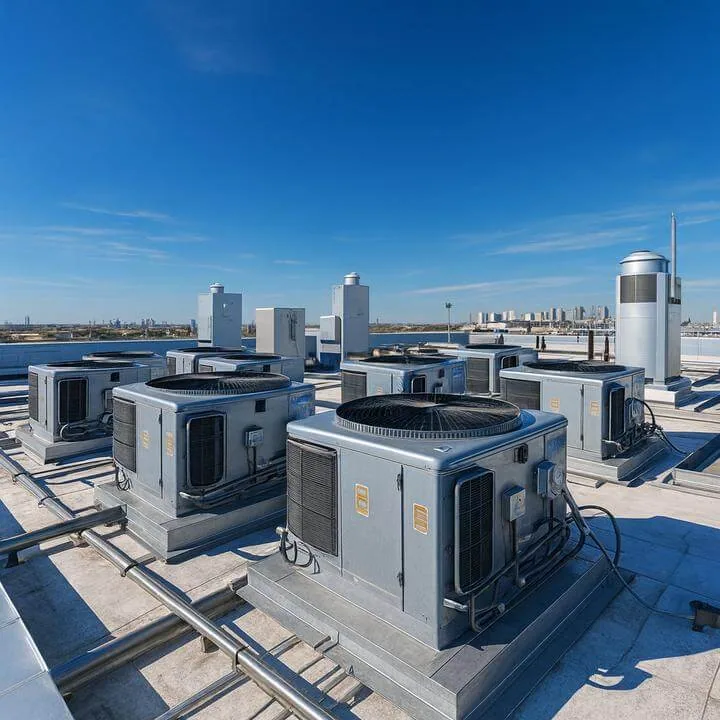
Before scanning, we confirm the roof map, accessible zones, reflective surfaces, equipment layout, and any areas where the membrane cannot be crossed. Metal panels, heavy shading, rooftop units, and surface water can affect readings. We identify those limits in the notes instead of marking every temperature difference as moisture. A broad roof at a warehouse or flex building may be a candidate for mapped scanning, but the actual assembly and roof access determine the survey plan.

We can use drone imagery to support an overhead roof map where appropriate, then scan from safe roof positions using the selected equipment. That does not mean every roof can be surveyed remotely. We explain which sections were scanned, which were not, and whether additional access is needed. The photo log keeps thermal images connected with visible roof details.

Map patterns, then verify

The scan produces a set of temperature patterns that we compare with roof layout, drainage, membrane transitions, and known leak areas. We mark candidate zones and explain the basis for each selection. A thermal image may reflect moisture, but it can also reflect insulation variation, shading, repairs, or other conditions. We do not call an area wet until a test cut or another direct method confirms it.

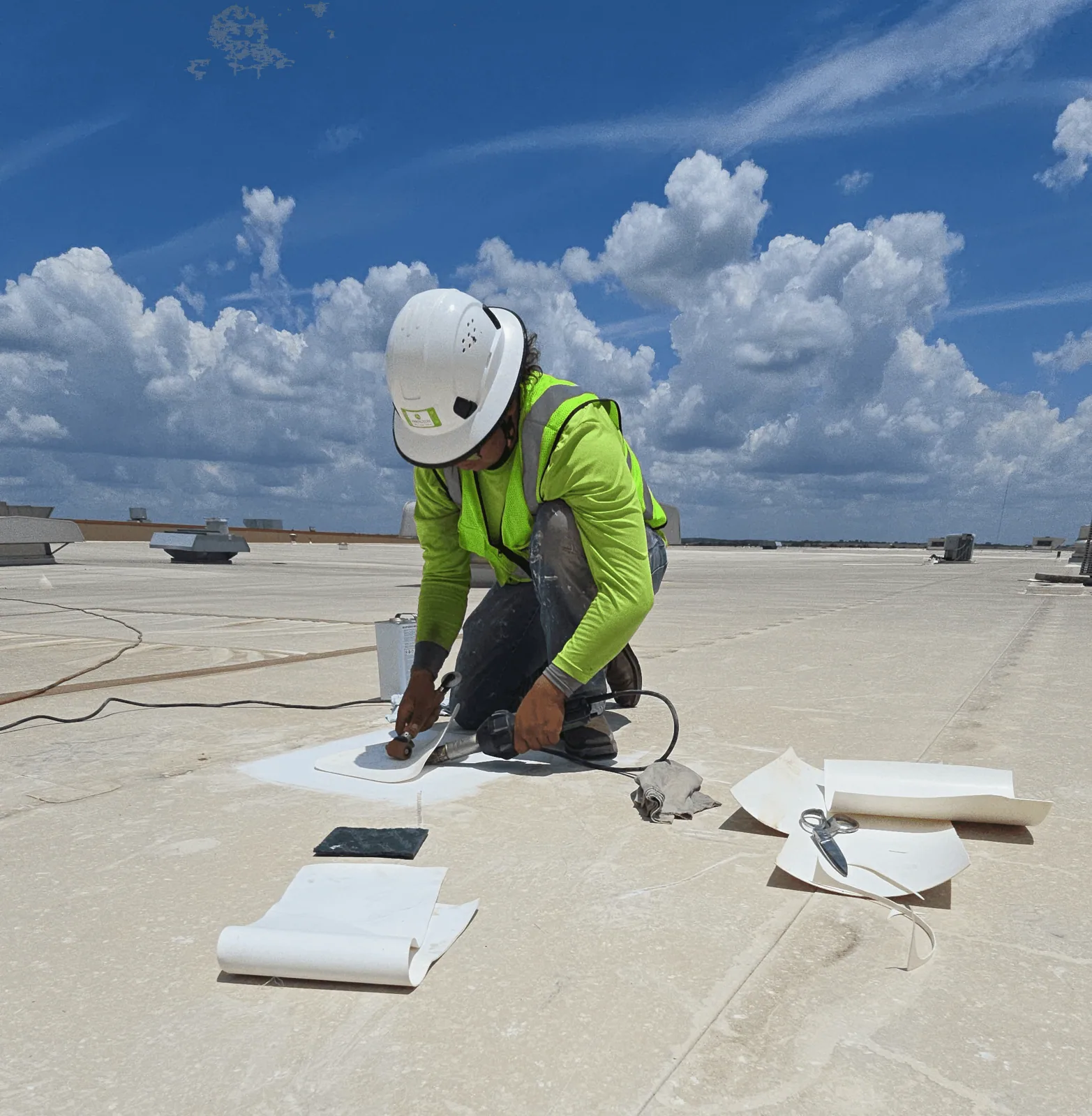
Targeted test cuts provide that confirmation at selected locations. With owner approval, we open small areas, inspect insulation and substrate, record the layers, and close the test points. Each cut answers a local question; it does not prove that the rest of the roof is identical. We choose locations that test the pattern and boundary, then use the results to refine the moisture map. If a cut reveals wet insulation, we document its extent and discuss what additional openings would clarify.

El Dorado Business Campus is an 85-acre suburban office park along I-84 near St. Luke’s Meridian Medical Center. We verify the roof layers and operating requirements with the building contact. A targeted infrared review can support a larger commercial inspection when the owner needs a complete condition record.

Infrared Moisture Survey in Meridian, ID

Show the confirmed boundary

The deliverable should make the survey actionable. We provide a roof-area map, thermal images, corresponding visible photographs, test-cut locations, and written findings. Each candidate zone is labeled as a pattern requiring confirmation or a condition verified by a test. We identify surfaces that could not be scanned and conditions that limited interpretation. The owner can then compare the map with active leak reports and planned repair areas.

Repair planning depends on both moisture extent and the surrounding assembly. If wet insulation is confined, removal and patching may be possible. If it spans several roof sections, the owner may compare repair with recover or replacement. The report identifies where more cuts or design input are needed before choosing. For a recover review, moisture findings help assess whether existing layers can remain. For a replacement scope, the same map can help set removal boundaries.

We keep the original scan, notes, and verification points together. If equipment or surface conditions change before construction, we note that the interpretation may need review. The report does not promise that all concealed moisture has been found; it states the sampled areas and limits. That gives the facility director evidence for the next decision and a record that can be compared with future inspections.

Infrared Moisture Survey in Meridian, ID

Coordinate testing at an active facility

The survey requires a person who can authorize roof access and, if needed, test cuts. We confirm hatch access, escorts, roof rules, tenant timing, and any areas with sensitive operations. The facility contact tells us whether HVAC units need to stay in service and which spaces cannot be interrupted. We agree on the test locations and how each opening will be closed before the crew begins.

Properties near Eagle Road or Ten Mile may have retail, medical, office, and industrial operations close together. The schedule depends on the individual building, not the corridor name. We coordinate deliveries and roof access with the site contact and keep foot traffic clear. If the scan needs a cooler evening window, we agree on a contact who can remain available and provide roof access at that time.

Weather can shift the scan window. Cloud cover, wind, rain, and temperature change the thermal response, while winter freezing conditions may affect safe movement on the roof. We confirm the conditions before traveling and state when a reschedule will yield more useful readings. If the owner needs a same-day leak response, emergency dispatch can handle immediate protection separately from a planned moisture survey.

Infrared Moisture Survey in Meridian, ID

Turn results into roof work

Once findings are reviewed, we identify which areas need repair, additional testing, or monitoring. The owner receives a clear distinction between suspected moisture and confirmed wet material. If repairs are approved, the work order references the mapped area and test evidence. After completion, a follow-up inspection can photograph the repaired boundary and update the property’s roof record.

A condition report can keep scan maps, test-cut results, and repair records together. A maintenance program can revisit drains, seams, and repaired zones during later roof checks. That history helps a manager see whether a known issue changed or whether another area needs review. Each new scan is interpreted on its own conditions rather than copied from an older map.

For buildings in Meridian’s mixed commercial and employment areas, a useful report names the roof zones in terms the facility team recognizes. We confirm labels with the site contact and preserve a location key with the photos. That keeps a future dispatcher from guessing which unit, bay, or roof section the prior notes meant. The record supports the next repair boundary, budget discussion, or replacement decision.

Does an infrared image prove the roof is wet?

No single temperature pattern proves moisture. Shade, repairs, equipment, and weather can create differences. We map candidate areas and use test cuts or another direct method to confirm them. The report separates suspected patterns from verified wet insulation and notes any limits.

When should an infrared survey be scheduled?

The best window depends on roof construction, recent weather, solar heating, and the cooling period. We review forecast and surface conditions before setting the visit. If the temperature contrast will not support useful readings, we recommend another time or an inspection method suited to the question.

How many test cuts are needed?

The number and locations follow the scan pattern, roof layout, and owner’s questions. A test cut confirms conditions at its location; additional openings may be needed to understand a boundary. We propose locations, obtain approval, record each result, and close each test area after inspection.

Can this survey help price a roof replacement?

It can help identify candidate areas for removal and confirm some concealed conditions when paired with test cuts. The final scope also depends on roof layers, deck, attachment, drainage, details, code, and site access. We use the survey as evidence for a boundary, not as a substitute for a complete replacement inspection.

Plan a moisture survey

Send the Meridian address, roof plan if available, leak history, recent weather exposure, and site contact. We will review survey conditions, map candidate areas, and agree on any test cuts before reporting findings.

Call 555-555-5555 or fill out the form and we will be in touch.

Got a Leak?

For active leaks, storm damage or other urgent roof problems, call us directly at: 555-555-5555.

ServicesRoof SystemsProperty TypesIndustriesService AreasDamage RepairCapabilitiesManufacturersAboutRequest a Roof Assessment555-555-5555
Call555-555-5555