
Modified Bitumen Roofing in Meridian, ID

Modified bitumen roofing in Meridian, ID starts with checking seams, surfacing, and drainage. We repair, restore, or replace to match field conditions.

Modified Bitumen Roofing

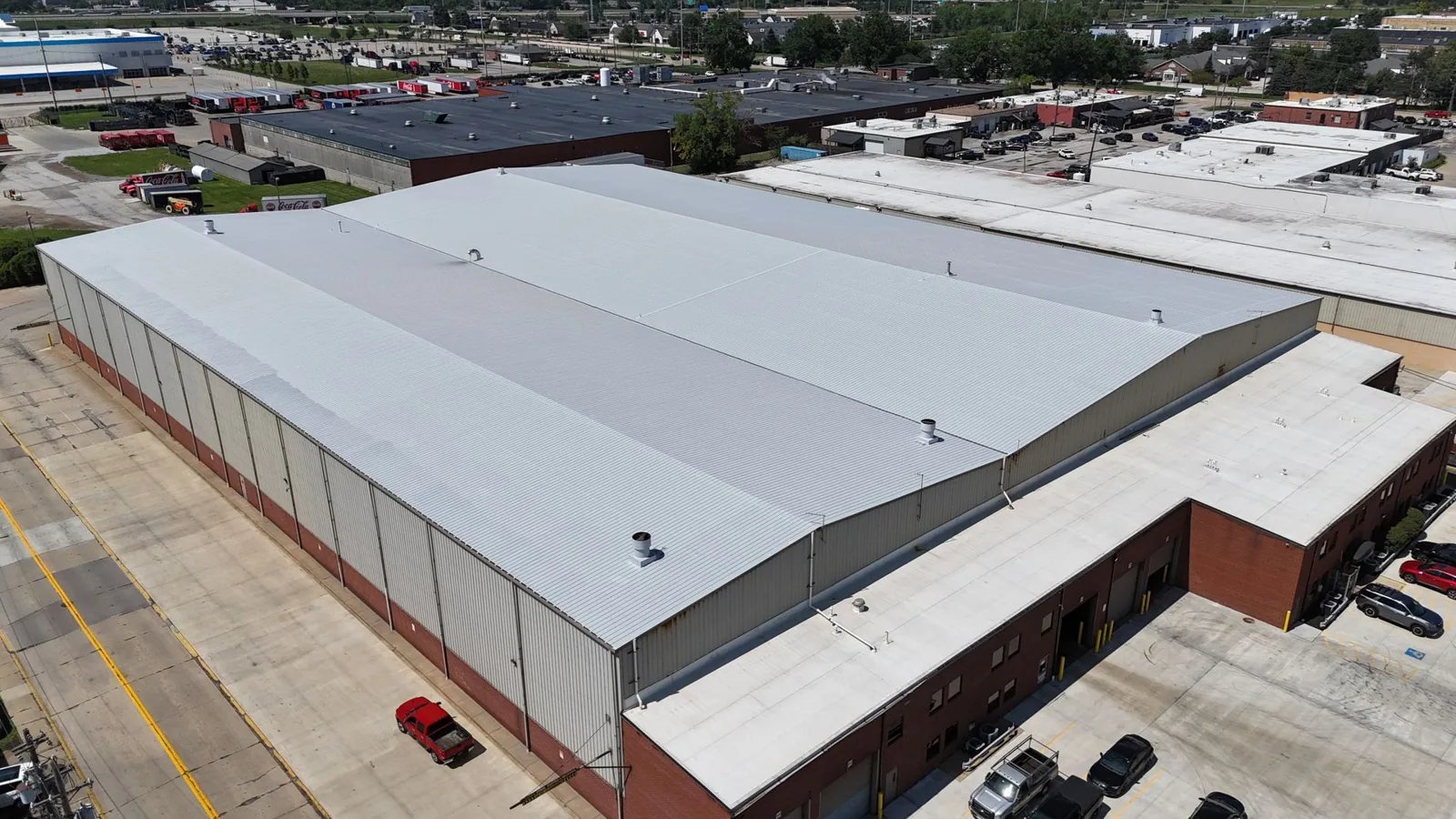
A curled cap sheet beside a drain changes the first read. In Meridian, we check the membrane lap, surface wear, drain bowl, and nearby curb corners before selecting a repair. Modified bitumen uses asphalt-based plies, often reinforced with fiberglass or polyester. SBS and APP compounds respond differently to movement and heat. The installed assembly, not the label alone, sets the repair method. July highs at nearby Boise Air Terminal average 92.7°F. We use the nearby station's summer heat profile to time surface reviews and inspect the roof directly. Send the address, active leak location, roof history, and access contact. Dispatch can set a useful first visit.

Read the Plies and Seams

Modified bitumen can be installed in multiple layers. The surface may carry mineral granules, a coating, or a smooth finish. We identify the exposed finish and determine whether the roof uses torch application, cold adhesive, hot asphalt, or self-adhered sheets. That distinction matters at a repair boundary. A patch must bond to a compatible, prepared surface. Heat application also requires controls around equipment, openings, and combustible materials.

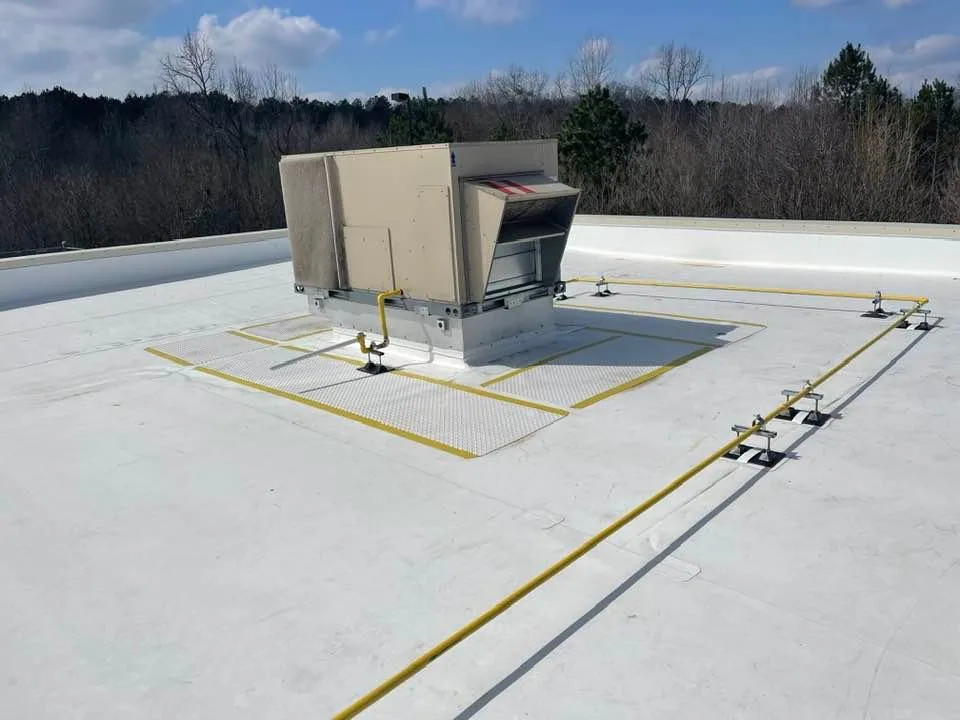
We inspect end laps, side laps, flashing turns, parapet transitions, and penetrations. A split may follow a seam, while a blister can indicate trapped air or moisture. We look for loose surfacing, exposed reinforcement, displaced base flashing, and movement at rooftop units. The photo log records each condition by roof zone. When layers hide the cause, a test cut may show the membrane, insulation, cover board, and deck condition.

Meridian's hot, dry summer makes surface condition worth recording before restoration work. Boise Air Terminal's nearby normals show only 0.21 inches of July precipitation. We use the nearby station's July precipitation normal to time surface reviews, then check for brittle areas and aged sealant at actual transitions. A roof beside Eagle Road may have different access and staging needs than a facility near Ten Mile.

Trace Water Beyond the Mark

A ceiling stain sets a location for investigation, not a repair boundary. We trace the likely route across the roof, checking laps uphill from the interior mark, wall terminations, pitch pockets, and drains. Modified bitumen may hold water at depressions where the slope or outlet has changed. We inspect drain bowls, strainers, overflow openings, and nearby seams. Winter conditions add another check. December lows at nearby Boise Air Terminal average 25.4°F, so drainage details deserve a direct look before freezing weather.

Water can travel between plies before it appears inside. We compare the leak history with roof plans and visible transitions, then identify where moisture testing could narrow the inspection. Infrared review can help locate temperature differences after suitable conditions; it does not replace a test cut when the assembly remains uncertain. We label suspected wet insulation and keep the repair boundary tied to confirmed findings. If the deck shows damage, the repair scope changes.

For a localized split, a compatible membrane patch may restore the area. Loose flashing or failed termination needs detail work around the transition. Widespread surface loss, repeated seam openings, or wet insulation may support a larger recovery or replacement evaluation. We explain the evidence for each option and note what remains hidden. That gives the facility team a decision record without treating one stain as proof of a roof-wide failure.

Modified Bitumen Roofing in Meridian, ID

Set the Work Limit

Repair begins with sound material around the defect. We clean the selected area, remove loose or incompatible material, and prepare the surface for the chosen system. A patch should extend onto stable membrane with a sealed perimeter. Flashing work may require new base flashing, a termination bar, or compatible sealant at a transition. The method depends on the existing assembly and the condition found during inspection.

For SBS membrane, flexibility can help accommodate movement in suitable details. APP products use a different modifier and may rely on heat-welded application. We identify the existing material before specifying a compatible repair. A surface coating may slow weathering when the membrane and details remain suitable, but coating cannot correct trapped moisture or failed attachment. If testing finds wet insulation, we map affected sections and discuss replacement limits before closing the roof.

Our written scope marks the repair area, preparation, flashing work, and any testing needed. Photos show the initial condition and completed seam or detail. A repair should leave a clear record of what was opened and what was restored. Where the roof has recurring issues, a commercial roof inspection can establish broader condition, while a restoration review can test whether the field remains a coating candidate.

Modified Bitumen Roofing in Meridian, ID

Plan Access and Timing

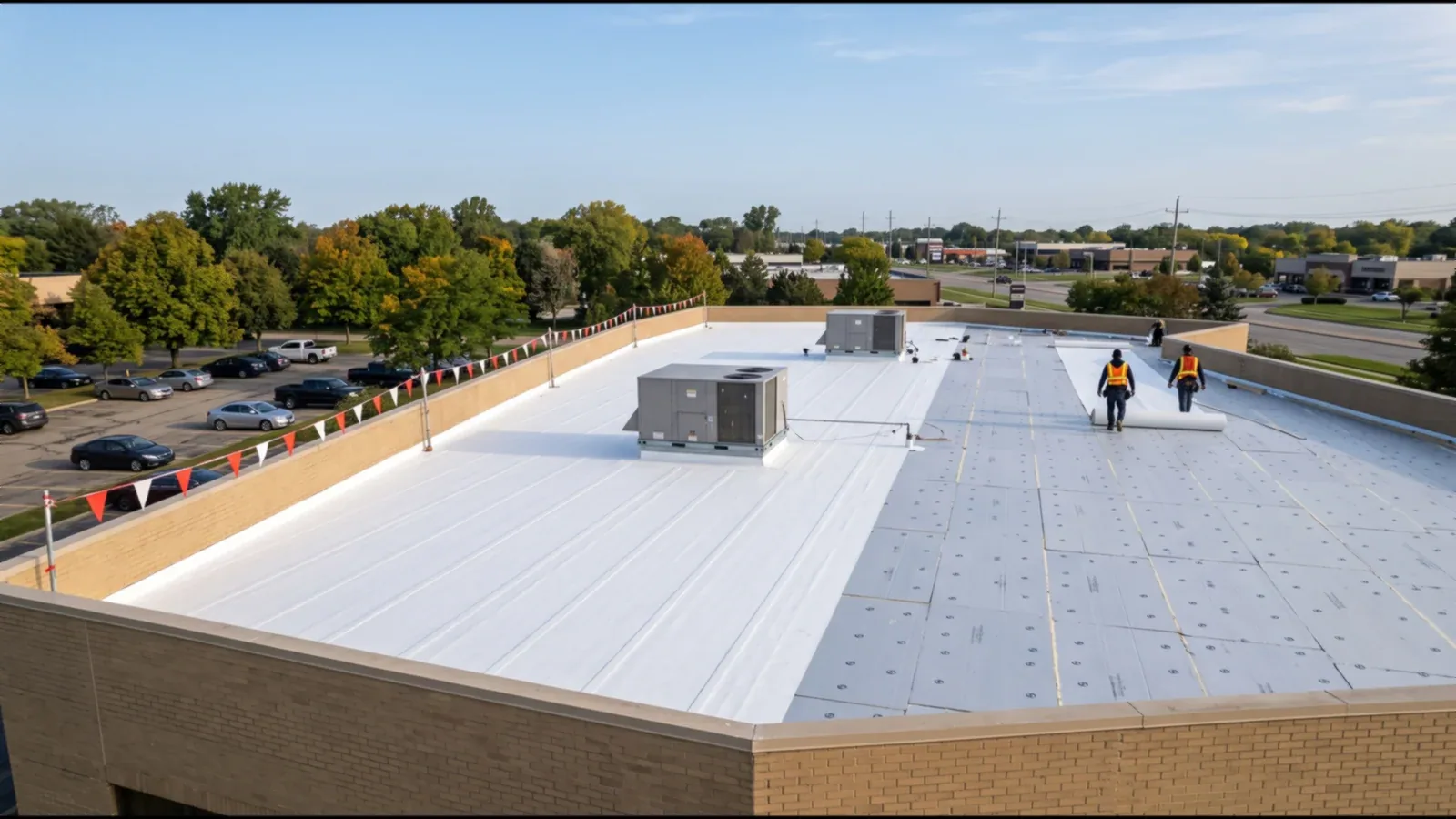
Application conditions affect the schedule. Surface moisture, temperature, wind, and the selected adhesive or heat method can change when crews can work. We confirm roof access, staging, hot-work controls when applicable, and the path to the repair area before mobilizing. An occupied building may need deliveries timed around loading and tenant circulation. A site at The Village may have a different access window than a distribution operation near I-84.

Work zones stay defined around roof hatches, HVAC equipment, and open drains. If another trade has equipment scheduled, we coordinate the boundary and handoff. Dispatch notes list the contact who can open the hatch, any roof access restriction, and the active leak location. Emergency response remains available around the clock, including holidays. The first visit can document conditions and protect the immediate area when permanent work needs a suitable application window.

Cost and timing depend on how many roof details need work, how much material must be removed, insulation condition, access, and the repair method. A small seam repair and a multi-layer replacement have different preparation and disposal needs. We separate confirmed work from optional testing so the owner can compare decisions. When the project requires permits, we check Meridian's adopted local provisions for the scope.

Modified Bitumen Roofing in Meridian, ID

Keep a Useful Roof Record

After the repair, we document the completed area and any remaining conditions. The photo log can identify the roof zone, seam or flashing detail, materials installed, and test results. That record helps a maintenance visit compare later movement with the original condition. It also gives a facility manager a location reference when a new water mark appears after a winter storm or equipment service.

Preventive checks can revisit the repaired perimeter, nearby drains, and transitions where membrane movement concentrates. We do not treat a repaired lap as evidence that all adjacent details are sound. A roof maintenance plan can schedule debris removal, drain review, and detail checks by operating window. Owners managing multiple sites can also compare condition reports and prioritize work across locations.

For a roof approaching a larger decision, we can compare continued repair, a recover assembly, and replacement after reviewing the deck and insulation. A single-ply alternative may suit some low-slope buildings. TPO assemblies offer another comparison point, while replacement planning addresses a deteriorated assembly. We can also assess nearby buildings in Eagle View Landing when the property portfolio spans the Meridian market.

How do you tell whether a blister can stay in place?

We inspect its size, attachment, moisture evidence, and nearby seams. A dry, stable blister may be monitored; a split or wet assembly needs a defined repair. We document the finding before choosing a boundary.

Does SBS or APP decide the repair material?

The existing membrane type is one factor. We also check surface finish, attachment, lap construction, and the condition beneath it. The repair specification follows compatibility findings, not a product label by itself.

Can you restore a modified bitumen roof instead of replacing it?

A restoration review checks adhesion, moisture, flashing, and surface preparation. Sound areas may accept a compatible coating. Wet insulation, widespread separation, or a weak deck can require removal or replacement.

What should dispatch know before arriving?

Send the Meridian address, leak location, recent roof history, and access contact. Note any active equipment work or roof hatch restriction. Dispatch can set the first inspection around the operating schedule.

Set the First Roof Read

Send the Meridian address, leak location, recent roof history, and site access contact. We will arrange an inspection window and document the repair boundary.

Call 555-555-5555 or fill out the form and we will be in touch.

Got a Leak?

For active leaks, storm damage or other urgent roof problems, call us directly at: 555-555-5555.

ServicesRoof SystemsProperty TypesIndustriesService AreasDamage RepairCapabilitiesManufacturersAboutRequest a Roof Assessment555-555-5555
Call555-555-5555