

Distribution Center Roofing in Meridian, ID

Distribution center roofing in Meridian, ID calls for leak mapping, dock coordination, and phased access. We document repairs around active logistics work.

Distribution Center Roofing

A drip above a sort lane can stop work before the roof defect is clear. We inspect the leak route, dock-side access, drains, and equipment curbs before setting a repair boundary in Meridian. The first dispatch record needs the address, active leak location, operating window, and access contact. A distribution center has moving freight, scheduled trailers, and employees working below the roof. We coordinate roof access and any interior protection with the facility lead before staging materials.

Map Findings to Facility Zones

We divide the roof into practical zones tied to the building plan, drains, expansion joints, and mechanical areas. The inspection checks membrane seams, perimeter attachment, flashing, penetrations, and visible ponding. Below, we record the affected dock, conveyor area, staging lane, or storage section when the facility contact can provide it. That location helps the team protect inventory and plan around the repair without clearing the full floor.

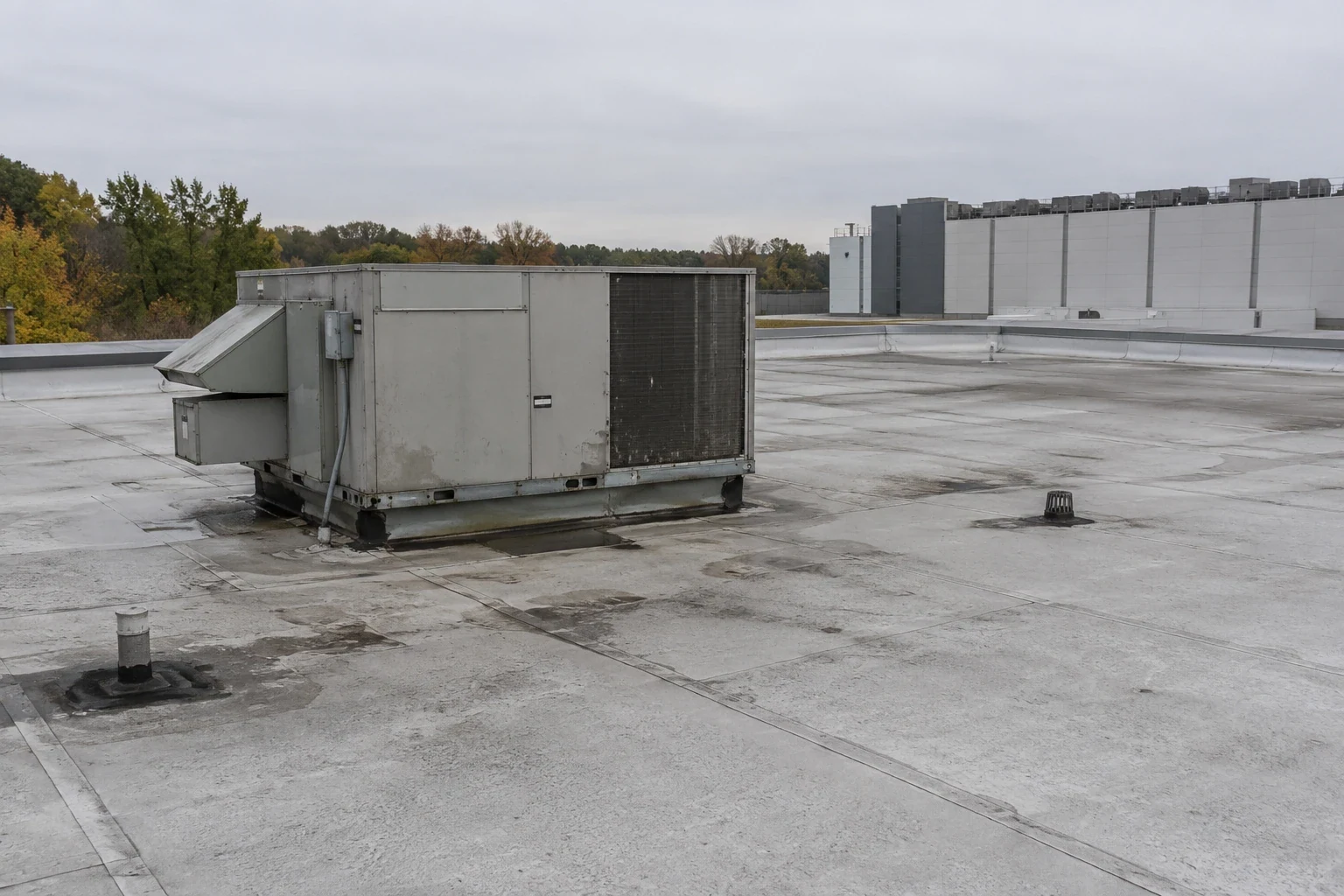
Distribution roofs may have many rooftop units and service routes. We inspect curbs, pipe penetrations, exhaust openings, and walk paths where trade work can disturb the membrane. A reported ceiling mark may not line up with the entry point. We trace uphill, compare conditions with the reported timing, and note recent mechanical work. Photos show the observed condition and the limits of access.

Meridian's comprehensive plan identifies warehousing, storage, light manufacturing, flex space, and incidental offices among industrial uses. The Ten Mile area also plans for light-industry alongside retail and office activity. These settings can bring different truck schedules and roof access rules. We confirm the specific operation rather than assuming a roof or workflow from a zoning label. Near I-84, the site contact can identify trailer peaks and lift staging limits.

Trace Water Past the Staging Lane

Water can travel between roof layers and emerge over a different work zone. We inspect drains, scuppers, seam laps, curb corners, wall transitions, and overflow routes above the reported mark. A leak during a shift may relate to a storm, equipment service, or drainage restriction. We document what the roof shows and whether interior access confirmed wet insulation or deck damage. One stain does not define the scope.

Meridian has hot, dry summers and freezing winter nights. Nearby Boise Air Terminal's January precipitation averages 1.41 inches, while the December daily low averages 25.4°F. That station provides regional context. We check the roof directly for drain restrictions, ponding, and vulnerable transitions. For a broad field, strainers and overflow paths need to remain open during work and after materials are staged.

If the assembly may hold moisture, infrared review can help prioritize test locations when conditions allow. A test cut can confirm insulation, cover board, and deck condition at the selected point. We photograph and restore the opening. The condition map separates confirmed wet areas from visual concerns. That distinction matters when operations staff are deciding whether to move product, protect a lane, or plan a larger roof project.

Distribution Center Roofing in Meridian, ID

Choose a Scope That Fits the Flow

A puncture or short open lap may need a local repair if sound membrane surrounds it. A failed drain detail, loose edge, or repeated seam separation may require a broader repair. We identify the installed system, prepare the surface, and tie materials into stable roof area. If testing finds wet insulation, removal may be necessary. The report identifies the expected work boundary and any unknown conditions that could change it.

For widespread deterioration, we compare recover and replacement options after reviewing attachment, moisture, deck condition, drainage, and roof height. Recover work can preserve serviceable layers only when the existing assembly is suitable. A coating restoration also needs dry, compatible surfaces and sound details. We explain the limits of each option and how the work could be phased around shipments. That gives facility leadership a basis for scheduling capital work.

A warehouse roof can have similar dock constraints, while cold storage adds interior temperature control concerns. Distribution-center scopes may include emergency roof repair or drain correction. If the roof needs a different assembly, TPO roofing and metal retrofit can be compared against the building design. A local Ten Mile Crossing property may need a different delivery plan from a site near downtown Meridian.

Distribution Center Roofing in Meridian, ID

Coordinate the Dock and Roof

We plan lift placement, material delivery, roof hatch access, and interior boundaries with the facility contact. Trailer lanes, fire access, and employee routes remain part of the daily sequence. Dispatch notes identify the person who can approve access and the hours when noisy or disruptive steps fit. If a dock must remain clear, we stage from another side or use a phased work zone when the building allows it.

Work can be sequenced by roof section, but each opening needs a weather plan and an end-of-shift closure. Mechanical equipment stays accessible for service. We coordinate temporary shutdowns with operations staff and confirm that vents or intakes remain protected. The team marks the repair boundary and removes loose material from drains before moving to the next section.

The dispatcher can arrange emergency roof support at any hour, including holidays. During a first visit, we document active water entry and temporary protection needs. Application conditions, freight access, lift setup, test results, and insulation replacement affect timing. Cost also follows the number of transitions, roof sections, and disposal needs. We put those factors in the scope before the facility approves work.

Distribution Center Roofing in Meridian, ID

Keep Dispatch Records Useful

We document completed work with photos, roof-zone references, materials, and test results. The record states which dock or interior area was reported and what the roof inspection confirmed. If a later leak appears, maintenance staff can compare location, weather, and repair history. That can narrow the next visit without assuming the new symptom has the same cause.

Follow-up checks can revisit repaired seams, drains, equipment curbs, and roof edges. Trade work should be recorded when it crosses the membrane. A preventive maintenance visit can clear outlets and flag new surface damage. A broader condition report can rank findings by operational impact and repair need.

Owners coordinating more than one facility can compare work windows and repair priorities. A distribution operation in Eagle View Landing may have different tenant and traffic limits than a site near Ten Mile. We inspect each building and document the conditions that control its schedule.

Can you repair a roof over active sorting and shipping?

We plan around the operating schedule, dock access, and interior protection needs. Work can be phased when roof design and weather allow. The facility contact confirms areas that must remain open.

How do you limit disruption during a distribution center reroof?

We set work sections, delivery routes, equipment access, and daily closures before starting. The sequence depends on roof area, freight peaks, weather protection, and whether interior operations can shift temporarily.

What information helps locate a leak over a conveyor or dock?

Give dispatch the exact interior zone, time noticed, recent equipment activity, and roof access contact. We compare that report with drains, seams, curbs, and the likely water path above it.

When would you recommend replacing rather than patching?

Repeated failures, widespread moisture, weak attachment, or a compromised deck may justify a larger scope. We document the evidence and compare repair, recover, and replacement after testing as needed.

Coordinate a Distribution Roof Review

Send the Meridian address, leak zone, operating windows, recent roof history, and access contact. We will map the roof condition around active logistics work.

Call 555-555-5555 or fill out the form and we will be in touch.

Got a Leak?

For active leaks, storm damage or other urgent roof problems, call us directly at: 555-555-5555.

ServicesRoof SystemsProperty TypesIndustriesService AreasDamage RepairCapabilitiesManufacturersAboutRequest a Roof Assessment555-555-5555
Call555-555-5555