
Commercial Roofing in the Ten Mile District, Meridian, ID

Roof inspections and repairs in Meridian’s Ten Mile District, with work planning for mixed-use, office, retail, and light-industrial properties.

Ten Mile District

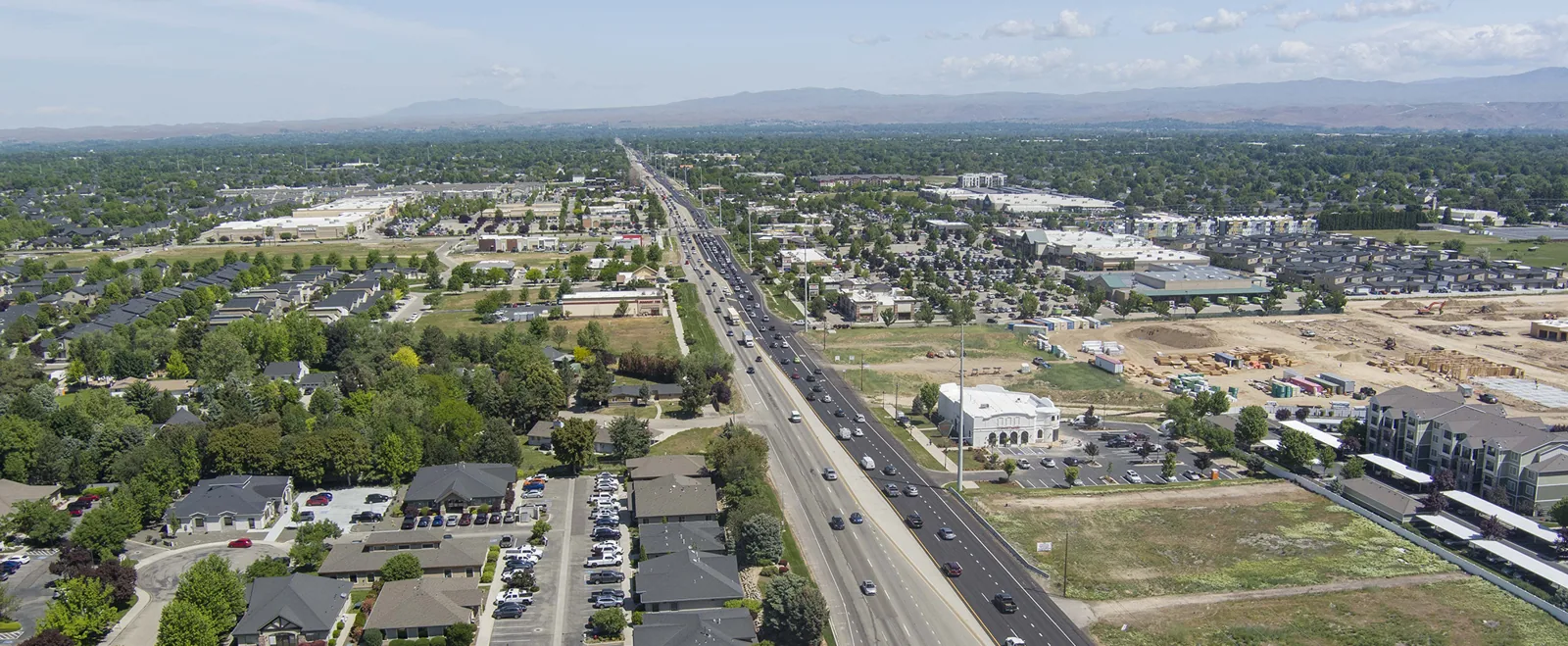
A wet seam beside a rooftop unit needs a measured first check. We inspect the curb, membrane, nearby drain, and room report before setting scope. The Ten Mile Urban Renewal District covers 301 acres and began in 2016. More than 900 residents and 1,100 employees are associated with the district, with new residential and commercial projects continuing. Dispatch needs the specific Meridian address and access contact.

The Ten Mile plan calls for retail, office, and light-industrial uses at ground level within a mixed-use employment area. We plan around the building and its operating schedule. Nearby Boise Air Terminal normals provide regional context for Meridian’s hot summers and winter freezes. A commercial roof inspection establishes the actual membrane and drainage condition.

Start With the Roof Zone

A mixed-use district can include different schedules and access rules. The roof assembly still requires direct identification. We check seams, parapets, curb corners, penetrations, drain bowls, and edge metal. Photos show each detail and its roof-plan reference. A room stain guides the walk but does not prove where water entered. The report labels visible defects separately from suspected paths.

At a unit curb, we inspect flashing height, termination, sealant, and movement. We look for a seam pull where the field membrane meets the curb corner. At the drain, we check the bowl, strainer, sump, and overflow. Debris or a blocked path can complicate a leak investigation. A curb and equipment review can document the transition before an HVAC contractor makes changes.

Ten Mile is an employment area with residential and commercial projects. That mix makes delivery windows, escorts, and interior protection property-specific. The site lead confirms which business is operating below the work. We ask whether another trade needs the same unit or roof hatch. A condition report with photographs records findings and inaccessible areas for later comparison.

Trace Moisture Through the Assembly

Water can move beneath a membrane before appearing in an occupied room. We compare the reported location with roof slope, drains, seams, walls, and prior repairs. If wet insulation could widen the repair boundary, we explain whether infrared review or a test opening would help. The site lead identifies the sample point and confirms interior coverage. An infrared moisture survey can help prioritize a roof zone for follow-up. The image needs interpretation and cannot confirm moisture without additional evidence.

Meridian’s summer heat and winter freezing conditions call for different inspection timing. We review exposed flashing and membrane during warm periods, then check outlets and overflows before freezes. The nearby Boise station supplies seasonal weather context for Meridian. We inspect the assembly directly for split sealant, loose seams, ponding evidence, and wet insulation. Service notes help determine whether a stain recurred after prior work.

A test cut answers a limited question at a mapped point. We photograph each exposed layer and document the closure. One sample cannot clear another roof section. The report names the tested location and any added test that could change the recommendation. If the owner declines opening material, we identify that limit and describe what remains uncertain.

Ten Mile District in Meridian, ID

Set the Work Boundary

A local roof repair can fit when the surrounding assembly remains sound. We specify preparation, compatible material, tie-in, and repair edge. If a curb corner has failed but nearby sheet is stable, the work can stay focused. A wet layer or damaged deck may require a larger opening. We pause for approval before extending removal beyond the initial boundary.

Before adding a layer, we inspect the number and bond of existing plies, deck attachment, drainage height, and moisture. Coating needs a compatible base and detailed preparation. Replacement can add removal, debris handling, equipment coordination, and weather protection. We compare options against the observed roof, not district plans. A EPDM membrane system and a metal assembly need different repair methods. We verify installed material from markings, documents, and field details.

Cost and timing depend on roof height, lift access, staging, material availability, removal area, surface moisture, and work hours. A wet surface can delay welding or adhesion. Occupied spaces may need barriers or a phased sequence. The estimate states the included area, known conditions, and any test that could alter the work. An unconfirmed layer remains an open question until the owner authorizes testing.

Ten Mile District in Meridian, ID

Confirm Dispatch Details

The property contact confirms address, entrance, roof hatch, escort, loading, work hours, and interior restrictions. We record who can approve temporary protection and receive dispatch updates. Residential and commercial operations may have different windows. The site representative sets the building’s schedule and work window.

Calls outside business hours are logged with room, leak location, and the person authorizing temporary protection. The crew checks whether the roof is safe and ready for permanent work. If a weather or access restriction applies, the dispatch record lists the condition needed before a return.

To prepare a Ten Mile District visit, provide the building identifier, roof zone or interior mark, records of recent work, and the person directing entry. Note any active tenant or production limits. For nearby district work, identify Northern Gateway or Linder District as a separate property location. Dispatch records each building’s roof concern and approved route independently.

Ten Mile District in Meridian, ID

Keep Decisions Tied to Evidence

Closeout photos identify the installed material, repair area, tie-in, and visible limit. We note any test result and any area left unopened. The owner receives the work date, roof zone, and remaining monitoring item. A new leak report gets a separate room and location until inspection connects it with earlier work. Those records make future service easier to compare.

Maintenance can revisit seams, drains, curbs, and overflow paths. A scheduled roof maintenance check can revisit a recurring detail before the next leak call. The owner selects timing and approves each task. If the inspection points toward a larger project, the report separates that decision from immediate water control.

A Ten Mile District inspection begins with confirmation of the building and work area. We document what can be reached, then state what evidence supports the proposed next step. Added work stays subject to owner approval.

Does the district’s acreage describe the size of my roof?

No. The 301-acre figure describes the urban renewal district. It does not measure any building or roof. We identify the property and inspect its own roof plan, membrane, drainage, and access conditions.

How do you inspect a mixed-use building?

We check the affected roof zone and ask the site contact about the operation below. Seams, curbs, drains, flashing, and prior repairs are photographed. Interior restrictions or areas not reached appear in the report.

Can a repair happen while employees are working below?

The property lead sets the work window and any protection requirements. We can plan a phased sequence when access, noise, and safety conditions allow. Open areas receive a documented daily closure before the crew leaves.

When is moisture testing worth doing?

Testing helps when concealed wet material could change repair or replacement scope. We state what the method can show and where it would be used. The owner approves the test and protection below before material is opened.

What information does dispatch need?

Give dispatch the affected building, room or roof reference, latest service record, and person coordinating site entry. A plan or dated photo can help locate the first inspection area.

Set a Ten Mile District Roof Review

Send the property address, active leak location, recent roof history, and access contact. Dispatch will confirm the building and set an inspection window.

Call 555-555-5555 or fill out the form and we will be in touch.

Got a Leak?

For active leaks, storm damage or other urgent roof problems, call us directly at: 555-555-5555.

ServicesRoof SystemsProperty TypesIndustriesService AreasDamage RepairCapabilitiesManufacturersAboutRequest a Roof Assessment555-555-5555
Call555-555-5555