Commercial Roof Recover in Meridian, ID

Compare a commercial roof recover in Meridian, ID with tear-off using moisture findings, existing layers, drainage, code review, and operating needs.

Commercial Roof Recover

A recover proposal starts with a test cut, not a new membrane sample. The first check in Meridian is whether the existing assembly is dry, stable, and suitable to receive another layer. We inspect seams, perimeter details, curbs, drains, and the deck where accessible, then confirm who can authorize test cuts and roof access. A recover can reduce removal work when conditions permit. Hidden moisture, weak attachment, or a damaged substrate can rule it out.

Nearby Boise Air Terminal records an average July high of 92.7°F and an average December low of 25.4°F. We use those nearby normals to plan seasonal checks. The crew measures actual roof conditions before setting the work method. Ten Mile Crossing mixes office, retail, restaurants, banks, and medical services. A recover may reduce tear-off work. We set the closure area and sequence after reviewing the existing assembly and site operations.

Open the assembly carefully

We choose test locations to answer specific questions. One cut near a reported leak may show wet insulation; another at a different roof area can show whether the condition is isolated or widespread. We record each location, layer, moisture finding, and closure. If the assembly changes across an addition or earlier repair, the cuts should reflect those transitions. A surface that appears dry in the afternoon does not prove the concealed layers are dry.

Before a test cut, the site contact identifies hatch access, escort needs, operating hours, staging limits, and how to secure each opening. At Eagle View Landing, medical, office, retail, and corporate-campus properties have distinct access patterns. The owner should identify the right building contact for each area rather than rely on a general campus schedule.

Our inspection log ties findings to the roof plan and photos. Where a sample confirms wet insulation, we map the affected area and look for a path that could explain it. We do not infer the full extent from a single opening. A moisture survey can help direct test cuts across a larger roof, while hands-on inspection findings confirm the visible details and assembly transitions.

Check recover eligibility

Eligibility depends on the whole assembly. We review how many roof layers are present, the condition of insulation and deck, attachment, drainage, and the proposed system’s compatibility. Existing wet material generally needs to be removed or addressed; covering it can leave the defect concealed. Excess layers or unsuitable substrate can also affect loading and code compliance. Meridian adopted the 2018 International Building Code with local amendments. The project team confirms current permit requirements before finalizing a recover scope.

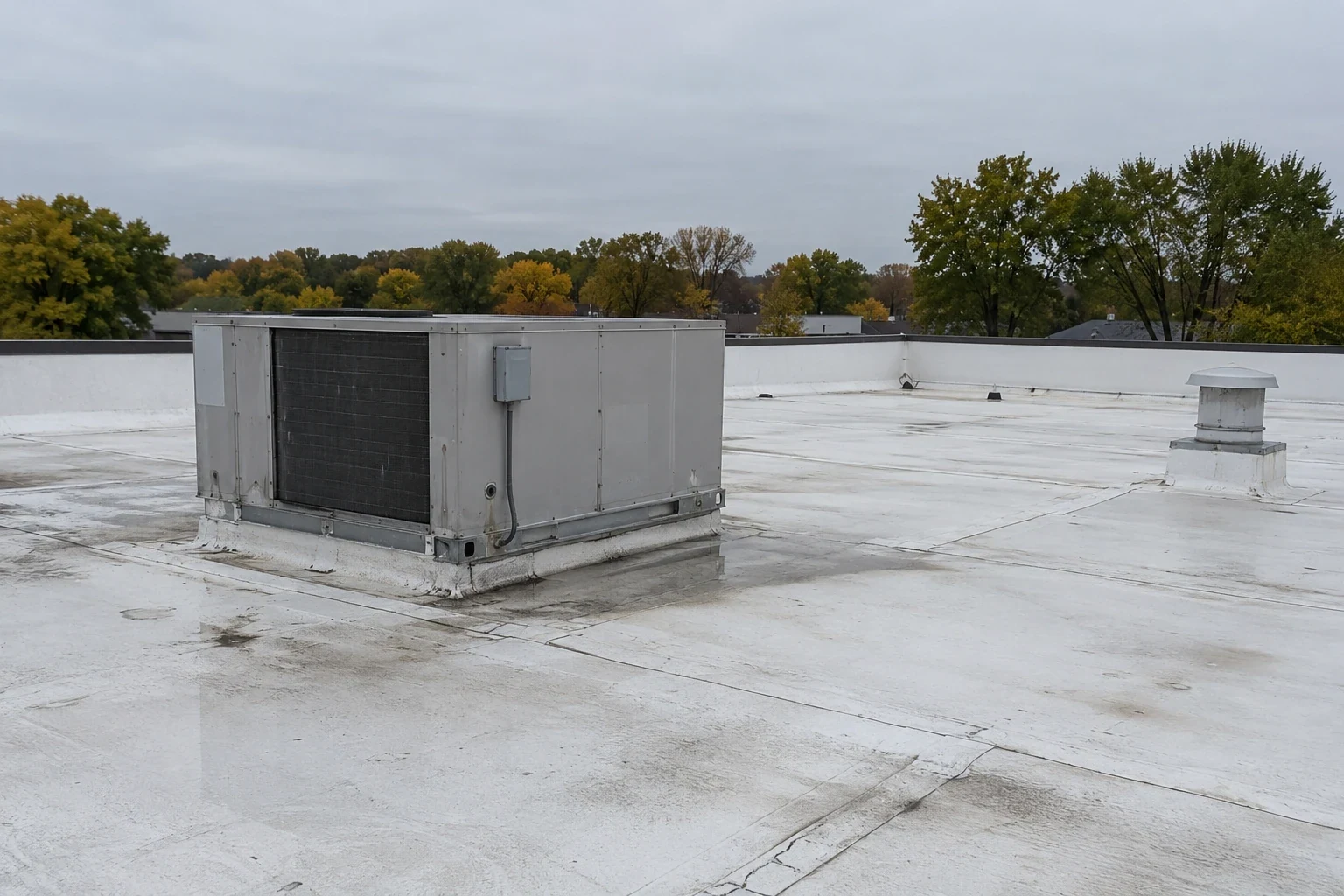
Drainage deserves a close look before adding thickness. A new layer can change transitions at drains, scuppers, edges, and doors. We check low spots, drain bowls, overflow paths, and the height available at curbs and equipment. The inspection asks whether water has a clear route off the surface and whether a recover would narrow that route. A drainage correction may need to be part of the project even when the field membrane can remain.

We also inspect seams, flashing, penetrations, and perimeter attachment. A recover does not repair every old detail by covering it. Curbs may need new flashing, edge metal may need adjustment, and loose components need correction before another system is installed. The proposed work states which details are removed, rebuilt, or retained. If damage is confined to one zone, the owner may compare the recover scope with localized roof repairs or a full replacement supported by the same findings.

Commercial Roof Recover in Meridian, ID

Match the overlay to the roof

Once the existing roof qualifies, we compare overlay systems by substrate, attachment, slope, penetrations, and maintenance needs. A mechanically attached or adhered single-ply membrane may suit one assembly; another condition may call for a different approved system. TPO, PVC, EPDM, modified bitumen, and coating systems each have requirements for surface preparation, seams, and transitions. We explain those differences in relation to the building rather than naming a product before the substrate is known.

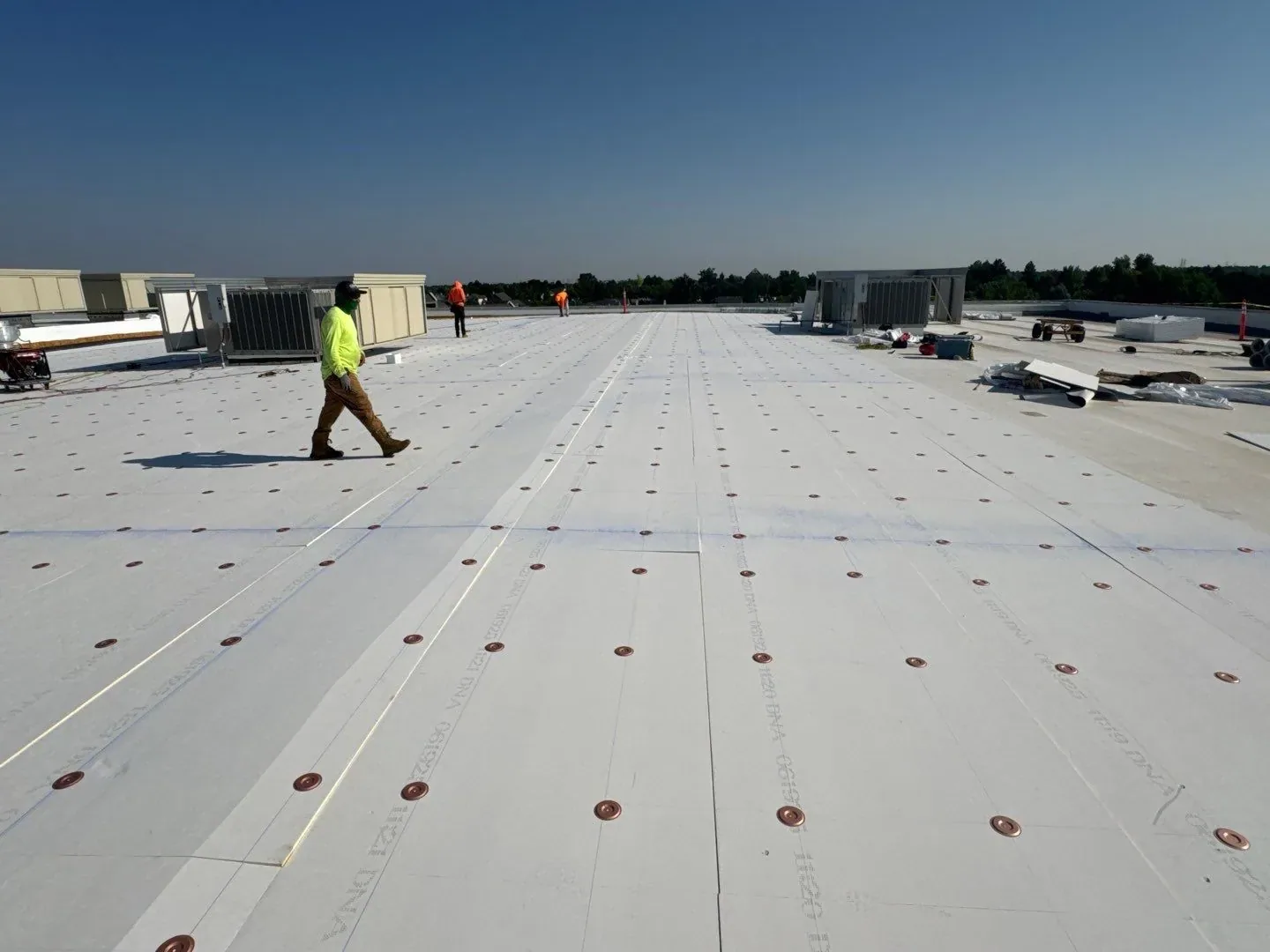
Cover board can provide a uniform surface or add protection, subject to design and attachment requirements. The assembly must address wind forces at corners and perimeters, equipment traffic, and the particular roof geometry. We review how a new membrane will connect at walls, curbs, skylights, drains, and adjoining roof sections. Owners considering a TPO roof system or silicone coating need a clear statement of the existing surface conditions each choice requires.

The project record should list the prepared substrate, repair work below the overlay, and the sequence for fastening or adhering new materials. It should also identify transitions that remain exposed to future service work. If other trades need to cross the roof, we coordinate protection and approved walk paths. Those steps matter at office and retail sites near Eagle View Landing, where several building uses can share a campus but not necessarily the same roof assembly.

Commercial Roof Recover in Meridian, ID

Plan a live-site installation

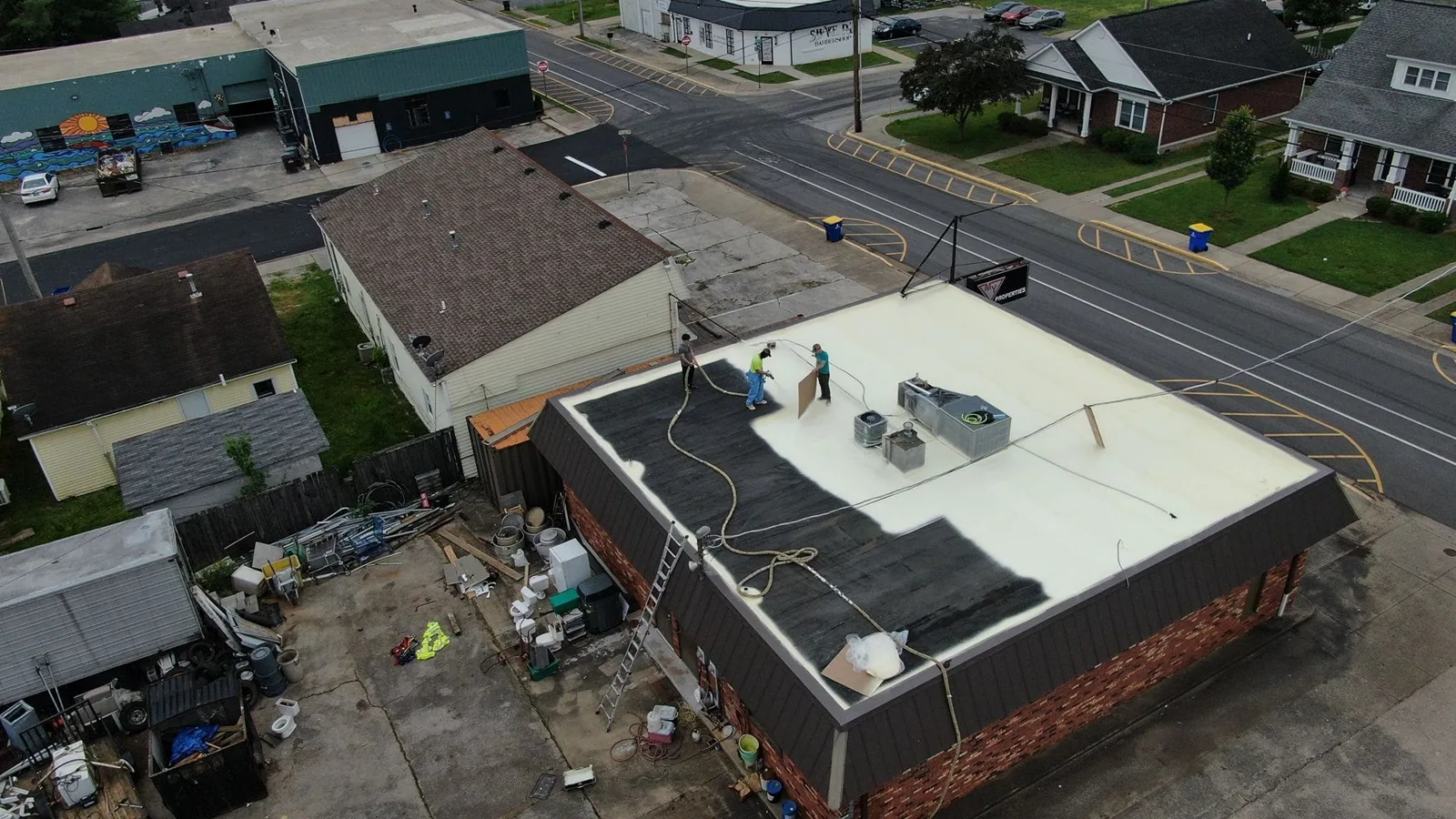
A recover reduces some tear-off handling but still brings deliveries, lifting, noise, and access limits. With the facility contact, we set work zones, hatch access, lift route, tenant entries, and equipment coordination. Each section is prepared and covered within the agreed window.

We follow the forecast and protect prepared zones from exposure. A retail or medical site may need deliveries outside busy hours; the operating contact sets workable times.

Permits, test results, and discoveries shape timing. We flag approval points before scope changes. At The Village at Meridian, dining, retail, entertainment, and office activity means deliveries and pedestrian routes need property-specific coordination. The same roof plan may call for another schedule at an industrial site with loading operations. We set the first visit after receiving the property location and access contact.

Commercial Roof Recover in Meridian, ID

Keep the decision record

A useful recover recommendation leaves the owner with more than a yes or no. We provide photos of the test cuts, roof conditions, repair boundaries, and proposed transitions. The record explains which areas qualify and why, which materials need removal, and what remains uncertain until work opens the assembly. That allows a manager to compare recover, repair, and replacement bids on the same conditions rather than on different assumptions.

After installation, inspections can track seams, drains, flashing, and equipment work that may disturb the roof. We record completed sections and any approved field changes. A condition report can preserve the baseline, and planned maintenance can identify debris, loose details, or drain obstructions before they become a larger repair. The appropriate interval depends on roof design and activity, not a calendar slogan.

When recover is not appropriate, we explain the specific reason and the next viable scope. Wet insulation, compromised deck, too many existing layers, unresolved drainage, or incompatible attachment are conditions to address, not sales objections. The owner can then plan removal and replacement with a defined work boundary. We can also review whether isolated areas can remain under a repair plan while the rest is replaced, if the inspection supports that separation.

Can a new membrane cover the old roof without opening it?

Moisture and assembly condition lead the decision. We inspect layers, insulation, deck, attachment, and code. Wet material or an unstable substrate may require removal instead of overlay.

Will a recover fix a drain that sits below the roof surface?

We check drain elevation, overflow, curb height, and transitions against the finished roof height. The scope includes corrections where the inspection or design requires them.

What does a test cut tell a Meridian building owner?

A cut reveals layers and moisture at that spot. We compare several locations with visible conditions; one opening cannot establish the entire roof’s condition.

How does a recover affect tenant operations?

Deliveries, lifting, noise, and access still need coordination. We set the work zone and tenant paths with the site contact, then follow the agreed window.

Check the existing roof first

Share the Meridian address, roof history, any active leak locations, and the site access contact. We will inspect the assembly, document test locations, and show whether recover, repair, or replacement fits the observed conditions.

Call 555-555-5555 or fill out the form and we will be in touch.

Got a Leak?

For active leaks, storm damage or other urgent roof problems, call us directly at: 555-555-5555.

ServicesRoof SystemsProperty TypesIndustriesService AreasDamage RepairCapabilitiesManufacturersAboutRequest a Roof Assessment555-555-5555
Call555-555-5555