
Cold Storage Roofing in Meridian, ID

Cold storage roofing in Meridian, ID needs leak tracing around insulation and drains. We coordinate access with temperature-controlled operations.

Cold Storage Roofing

Frost or water near a freezer-room ceiling needs a roof and building-side review. We inspect the reported area, roof penetrations, drains, and insulation conditions before selecting a repair boundary. Dispatch needs the Meridian address, leak location, temperature-control limits, roof history, and access contact. Cold storage operations may depend on a stable interior environment and continuous product handling. We coordinate access and work windows with facility staff before opening the roof.

Check the Roof and Temperature Boundary

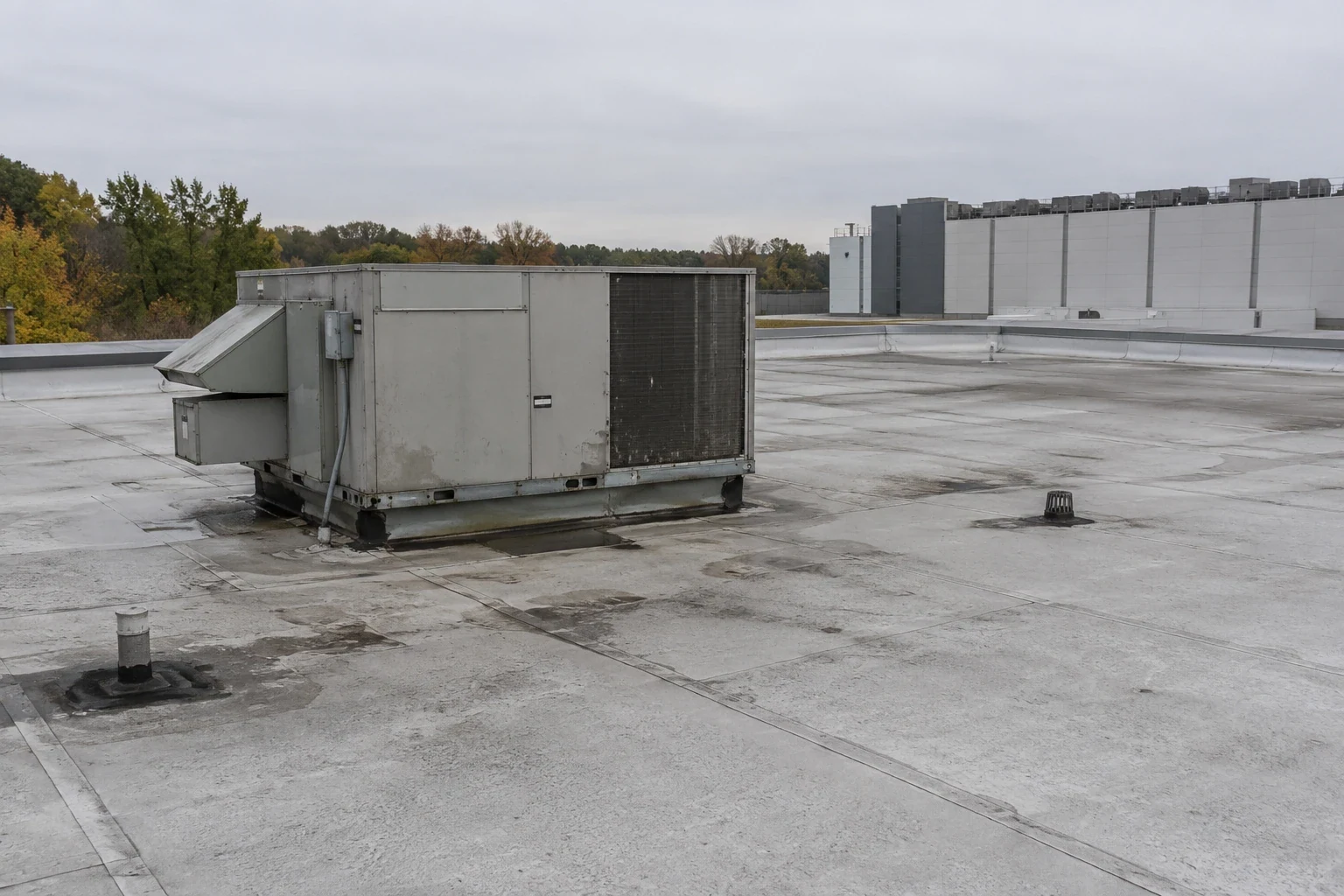
We inspect membrane seams, flashing, drain details, penetrations, and rooftop equipment above the affected room. At the ceiling, facility staff can point out frost, moisture, or a temperature change. Those signs do not identify the source by themselves. We compare them with the roof assembly, vapor-control details, and recent maintenance. The photo log records both sides of the reported area when interior access is available.

Cold storage roofs may include multiple insulation layers and careful air and vapor control. We check the visible roof system and review available plans before recommending a test cut. The opening should answer a defined question about wet insulation, deck condition, or a transition. We coordinate the interior location and product controls with the operator. Each tested area is mapped and restored using compatible materials.

Caldwell includes cold storage among its target industries. I-84, rail, US 20/26, and Cleveland Boulevard connect employers to regional freight routes. That regional context helps frame delivery and access planning across the Treasure Valley. A Meridian building near Ten Mile may have its own loading pattern. We confirm the operating schedule and roof access at the property rather than assuming the same conditions.

Separate Roof Water from Interior Moisture

A water mark in a cold room may follow a roof leak, condensation, or another building condition. We inspect the exterior roof route and ask facility staff when the symptom appears. Drains, curb corners, wall transitions, and penetrations can admit water. A change in insulation or vapor-control continuity may also affect how moisture appears. We document what inspection confirms and leave other causes open until testing supports them.

We follow the likely water path uphill from the reported location. The review includes strainers, overflow routes, seams, and equipment supports. Boise Air Terminal's annual precipitation normal is 11.51 inches, and August precipitation averages 0.17 inches. We use the station as a seasonal reference. We inspect actual drains and roof transitions for restriction, ponding, and freeze-related movement.

Infrared review may help direct test locations when conditions are suitable, but a test cut may be needed to confirm the roof layers. We coordinate that work with the facility so product, temperature, and sanitation requirements remain clear. If insulation is wet, we map the affected area before deciding whether repair, selective removal, or a larger replacement is needed.

Cold Storage Roofing in Meridian, ID

Protect the Cold-Room Envelope

A small membrane puncture can receive a localized repair when dry, sound material surrounds it. A failed curb or wall transition may need new flashing that maintains the roof and building boundary. We identify insulation condition, vapor-control details, and deck appearance before closing an opening. The repair scope notes which layers are replaced and how the work area will be sealed at the end of each shift.

For broader damage, a recover or replacement evaluation must consider assembly thickness, drainage, attachment, and continuity at walls and equipment. Adding layers without understanding the existing conditions can leave moisture trapped. We compare options with the facility operator and identify any temperature or product controls needed during construction. If temporary cooling or interior separation is required, that coordination belongs in the work sequence.

Cold storage projects may include insulation replacement, penetration flashing, and replacement planning. A warehouse roof may share freight constraints, while a manufacturing plant can add process access needs. We assess the actual facility and system before setting the scope.

Cold Storage Roofing in Meridian, ID

Coordinate Temperature-Controlled Work

We confirm roof access, lift staging, product movement, and any interior controls before scheduling. The facility contact identifies temperature alarms, restricted rooms, sanitation rules, and any equipment that must remain online. Dispatch notes identify who can approve access and how the site monitors conditions during roof work. If a ceiling area needs temporary protection, we agree on the method before opening the roof.

We plan daily closures around weather and the roof area opened. Drains and overflow paths stay clear while materials are staged. Mechanical or refrigeration trades may need access to lines or equipment curbs, so we coordinate the handoff. A work window near I-84 freight routes may differ from one at a smaller Meridian facility. The operator confirms delivery and staffing restrictions.

For an active leak, dispatch can route a response at any hour, holidays included. An initial review can identify temporary measures. Permanent repair may depend on dry conditions, insulation testing, and interior coordination. Timing and cost reflect the number of roof openings, material handling, insulation depth, equipment conflicts, and access limitations. We identify those conditions before the facility approves the work plan.

Cold Storage Roofing in Meridian, ID

Document the Repaired Assembly

We photograph repaired seams, transitions, insulation openings, and completed closures. The record notes which room was reported, what the roof inspection showed, and whether testing was performed. Facility staff can use those references if a later temperature or moisture event occurs. The record separates a completed roof repair from any interior investigation that remains open.

Follow-up checks can revisit drains, penetrations, roof edges, and service areas around refrigeration equipment. New mechanical work should preserve flashing and vapor-control transitions. A maintenance visit can review the roof at planned access windows. A condition report can rank issues by exposure, operations, and repair scope.

Caldwell treats cold storage and logistics as regional priorities. We can assess a Meridian facility alongside a property in the Caldwell industrial and logistics corridor, while keeping each roof record distinct. A portfolio review can compare work timing without assuming every building uses the same assembly.

Can roof work affect the temperature inside a cold room?

A roof opening or interior access can influence the building boundary. We coordinate the work area, temporary closure, and monitoring with facility staff before cutting. The specific assembly and operating conditions set the plan.

Is frost on a ceiling proof of a roof leak?

Frost or moisture can have several causes. We inspect the roof above it and compare the symptom with temperature and operating history. Testing may be needed to separate exterior water from interior moisture movement.

How do you repair wet insulation over freezer space?

We map and test suspected areas, then identify the insulation and deck condition. Selective removal may be required. The work plan includes how each opening is closed and how the operator maintains interior controls.

What should dispatch know before a cold-storage visit?

Provide the property address, reported room, active leak or frost location, temperature limits, roof history, and access contact. Include delivery windows and any sanitation or escort requirements.

Coordinate a Cold-Storage Roof Read

Send the Meridian address, reported room, roof history, temperature limits, and access contact. We will coordinate testing and roof access with facility operations.

Call 555-555-5555 or fill out the form and we will be in touch.

Got a Leak?

For active leaks, storm damage or other urgent roof problems, call us directly at: 555-555-5555.

ServicesRoof SystemsProperty TypesIndustriesService AreasDamage RepairCapabilitiesManufacturersAboutRequest a Roof Assessment555-555-5555
Call555-555-5555