Occupied-Building Commercial Reroofing in Meridian, ID

Plan commercial reroofing in an occupied Meridian, ID building with phased zones, tenant notices, protected access, and daily closeout records.

Occupied-Building Commercial Reroofing

A tenant entrance below a planned tear-off sets the first zone boundary. In Meridian, we map roof access, occupied rooms, delivery paths, and areas that must remain open. The facility contact identifies tenant hours and emergency routes. We separate the work into sections that can be opened, installed, and closed safely. Daily dispatch notes identify the active zone and access changes. The site contact receives updates before each route shifts.

The Boise Air Terminal climate record places July’s average high at 92.7°F. Its December mean low is 25.4°F, from nearby Boise Air Terminal climate records. Those nearby normals frame heat and winter planning. The building’s current weather and roof conditions control each shift. At Ten Mile Crossing, office, retail, restaurants, and medical services can require different delivery windows. We plan with the contact for each property.

Divide the roof into work zones

We begin with a roof map and proposed sequence. The plan identifies which section opens first, where materials arrive, and how the crew exits each area. We keep emergency egress and tenant entrances clear. If a roof serves several uses, we coordinate the schedule around each operation. The facility director approves the access contact and daily communication path.

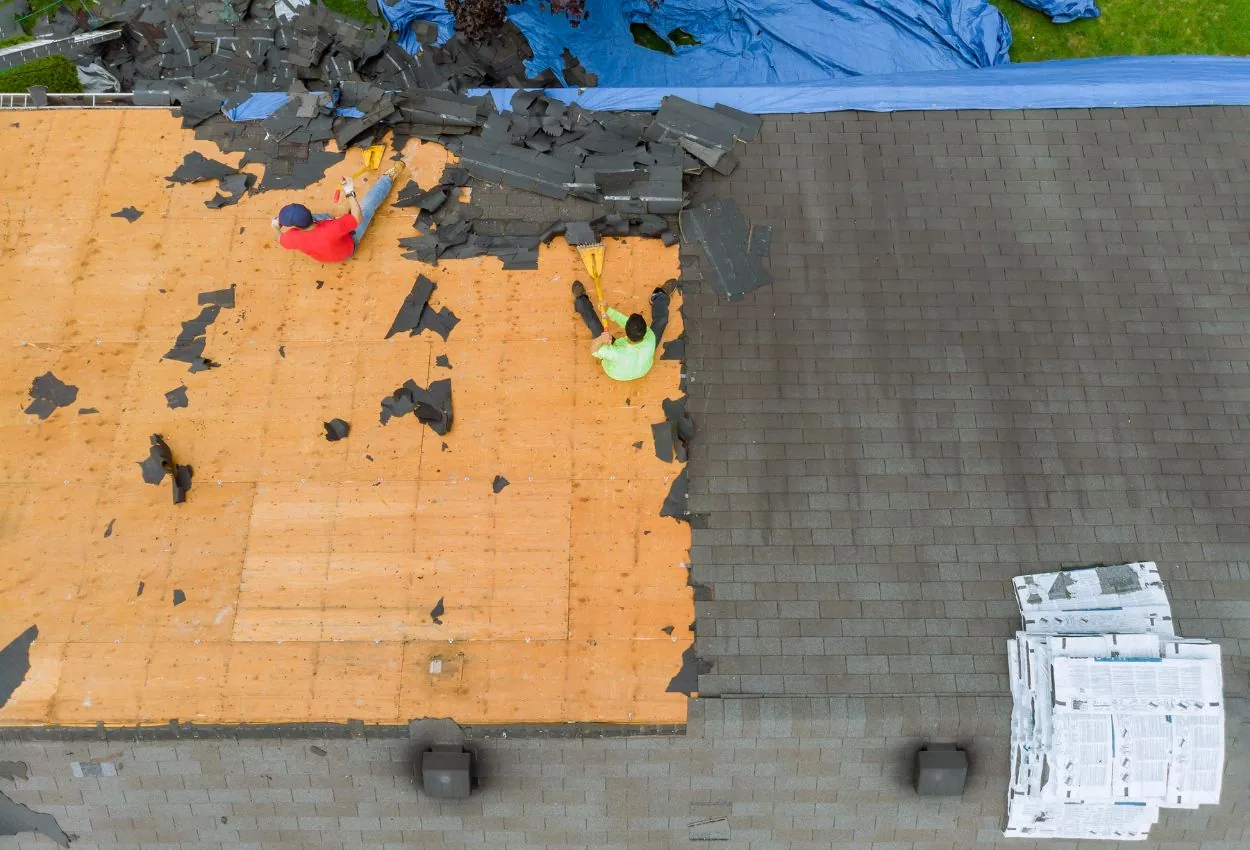
Each shift has a defined closure point. We remove only the area that can be covered with the planned crew and material. Exposed deck and insulation do not remain open overnight. If weather changes, the crew secures the active section and records any limit. The next zone opens after the first boundary is watertight and accessible.

At The Village at Meridian, retail, dining, entertainment, and office activity can affect pedestrian routes and deliveries. We coordinate those routes with the building representative. A warehouse or office near Ten Mile Crossing may need a different work sequence. The project plan follows the building’s use, not a standard shift template.

Protect tenants and building systems

We identify entrances, loading areas, sensitive rooms, HVAC intakes, and equipment that must stay in service. The site contact tells us which areas need advance notice. We agree on barriers and delivery timing before the first lift. If roofing work could affect an interior area, we coordinate protection with the building team. We identify ceiling spaces below each zone. The facility team can move contents and protect equipment. We record who installs and removes that protection.

Noise can vary by tear-off, fastening, and material handling. We flag louder work and schedule it around critical operations when possible. We keep debris routes away from public entrances. The facility contact can send tenant notices with the work dates, expected access changes, and a contact for questions. We update the site when weather changes the sequence.

Rooftop equipment needs trade coordination. We mark units and service paths before the crew moves through a zone. If HVAC shutdown or protection is needed, the mechanical lead approves the timing. The roof scope does not authorize equipment changes. A curb and support review can document details before the reroof starts.

Occupied-Building Commercial Reroofing in Meridian, ID

Confirm the scope before opening

Before tear-off, we inspect the visible assembly and review repair history. We mark drains, curbs, skylights, seams, and transitions. Test cuts can confirm insulation and deck conditions at selected locations. Findings help define the work boundary and any areas needing removal. The owner sees what supports the planned scope before the crew opens a roof zone.

Meridian’s industrial planning includes warehouses, storage, flex buildings, and light manufacturing. Those facilities can have active loading and production areas. We confirm the building schedule and interior restrictions. A single occupied property may require different sequences across offices, service areas, and loading sides. We record those constraints with the roof map.

If concealed damage appears after opening, the crew stops at the agreed limit. We photograph the condition and request direction before expanding work. The project record identifies the location and owner approval. A condition inspection can compare repair and replacement zones. A recover review may fit other areas if moisture and assembly conditions allow.

Occupied-Building Commercial Reroofing in Meridian, ID

Close every section each day

A phased project needs a secure end-of-shift condition. We check membrane tie-ins, temporary edges, drains, and any exposed materials. The crew removes loose debris and closes the active zone. The facility contact receives the roof status and next access window. If an area cannot be closed as planned, we identify the temporary protection and the return action.

Rain, wind, high surface temperatures, and freezing conditions affect daily work. Boise Air Terminal normals guide seasonal preparation; the property forecast and roof condition set each shift. We monitor current conditions and the roof surface. The crew follows product requirements and avoids leaving open insulation or deck exposed to changing weather.

Keep roof access instructions current during the project. The facility may change a hatch key, escort, or tenant contact. We update dispatch notes and confirm the new route before the next shift. A 24-hour response remains available if an unexpected leak affects an occupied area. The project lead needs the address, room, and access contact.

Occupied-Building Commercial Reroofing in Meridian, ID

Hand over a zone-by-zone record

Closeout photos show completed roof zones, transitions, drains, curbs, and work boundaries. We record any areas deferred for a later phase. The owner receives open items and maintenance notes. The site contact can use the same zone labels in tenant communication and future inspection requests.

Occupied operations continue after the crew leaves. Equipment service, deliveries, and tenant access can affect roof conditions. A maintenance schedule can check drains and seams after reroofing. A condition record can preserve photos and the installation sequence.

Send the Meridian address, tenant hours, roof history, affected rooms, and access contact. We will set a first visit with the facility team. The resulting sequence identifies work zones and daily closure points. That gives occupants a clear notice and gives dispatch a current roof map.

Can tenants keep using the building during a reroof?

Phased work can keep many operations running. We map entrances, rooms, deliveries, and roof zones with the facility contact. The plan identifies areas that stay open and any temporary access changes. We also note when tenant routes shift between zones.

How will tenants know when noisy work is scheduled?

A sequence lists expected work zones and louder tasks. Building management can send notices. We update the site when weather or concealed conditions change dates. The notice should name the site contact and next update window.

What happens if rain is forecast during tear-off?

We check the forecast and limit how much roof opens at once. Each zone closes with a planned tie-in. If conditions change, we secure the active area and record any temporary protection.

Who coordinates HVAC shutdowns during roofing?

The mechanical lead approves shutdowns and equipment changes. We list the unit and access window in the sequence. Each trade confirms its assigned task before roofing starts.

Set the first occupied-site meeting

Send the Meridian address, tenant hours, roof history, access contact, and any rooms or systems that must remain active. We will map the work zones and agree on a daily communication plan.

Call 555-555-5555 or fill out the form and we will be in touch.

Got a Leak?

For active leaks, storm damage or other urgent roof problems, call us directly at: 555-555-5555.

ServicesRoof SystemsProperty TypesIndustriesService AreasDamage RepairCapabilitiesManufacturersAboutRequest a Roof Assessment555-555-5555
Call555-555-5555